Private Catamaran Rentals in St Augustine: What to Expect
Private Catamaran Rentals in St. Augustine — What to Expect on a Guided Self‑Drive Tour

Private catamaran rentals in St. Augustine give you a hands‑on, intimate way to explore the water. Small two‑seat catamarans are driven by guests while a local captain leads the route from a nearby boat, points out landmarks, and watches for wildlife. This guide walks you through what a St. Augustine self‑drive catamaran tour includes: standard amenities, how the self‑drive format runs, typical wildlife and historic sights, pricing, safety rules, and simple tips to make the most of your time on the water. If you want the thrill of piloting a small craft without losing the benefit of a local’s knowledge and safety oversight, a guided self‑drive tour delivers that balance. Read on for clear expectations about trip lengths, passenger limits, booking basics, safety prep, alternative water activities, and why choosing a family‑operated operator often makes for a smoother, more memorable outing. This article is geared toward families, couples, and small groups deciding whether a two‑seater self‑drive catamaran is the right fit and how to prepare for a safe, wildlife‑rich tour of St. Augustine’s waterways.
What Is Included in a Private Catamaran Rental in St Augustine?
Most private catamaran rentals include a clean, well‑maintained two‑seater catamaran, required safety gear, a cooler with ice and water, and the guidance of a local captain who sets the route and shares local stories. Together these pieces—simple controls, safety equipment, and local narration—create a safe, hands‑on outing that still delivers context about landmarks and wildlife. Knowing these typical inclusions helps you compare self‑drive options with pontoons or larger charters and prepares you for what to bring. Below is a short checklist of the amenities and roles you can expect with a guided self‑drive catamaran rental.
This section lists the usual inclusions you’ll find on most guided self‑drive catamaran tours in St. Augustine.
- Two‑seater catamaran with a steering helm and basic controls provided to guests.
- Life jackets (PFDs) for every passenger, a first aid kit, and a safety briefing from the captain.
- Cooler stocked with ice and bottled water plus basic docking assistance from the guide.
- Guided route with narrated highlights from a local captain and priority stops for wildlife watching.
These standard inclusions make self‑drive catamaran outings accessible and comfortable for both new and experienced boaters, and they lead naturally into how a typical self‑drive session runs on the water.
How Does the Self-Drive Catamaran Experience Work?

The experience starts with a pre‑departure briefing: the captain shows steering, throttle use, docking basics, and required safety checks so you can pilot with confidence. Once you’re underway, the captain leads the route from a nearby boat or travels at a steady pace ahead, calling out maneuvers, planned stops, and windows for wildlife watching so you follow a safe, curated path. This setup balances freedom with oversight—guests get the satisfaction of driving a two‑seater while the captain manages navigation decisions and adds local context. Knowing the flow—briefing, guided following, and a safe return—helps first‑time drivers relax into the hands‑on part without compromising safety.
Which Historic Sites and Wildlife Will You See on the Tour?
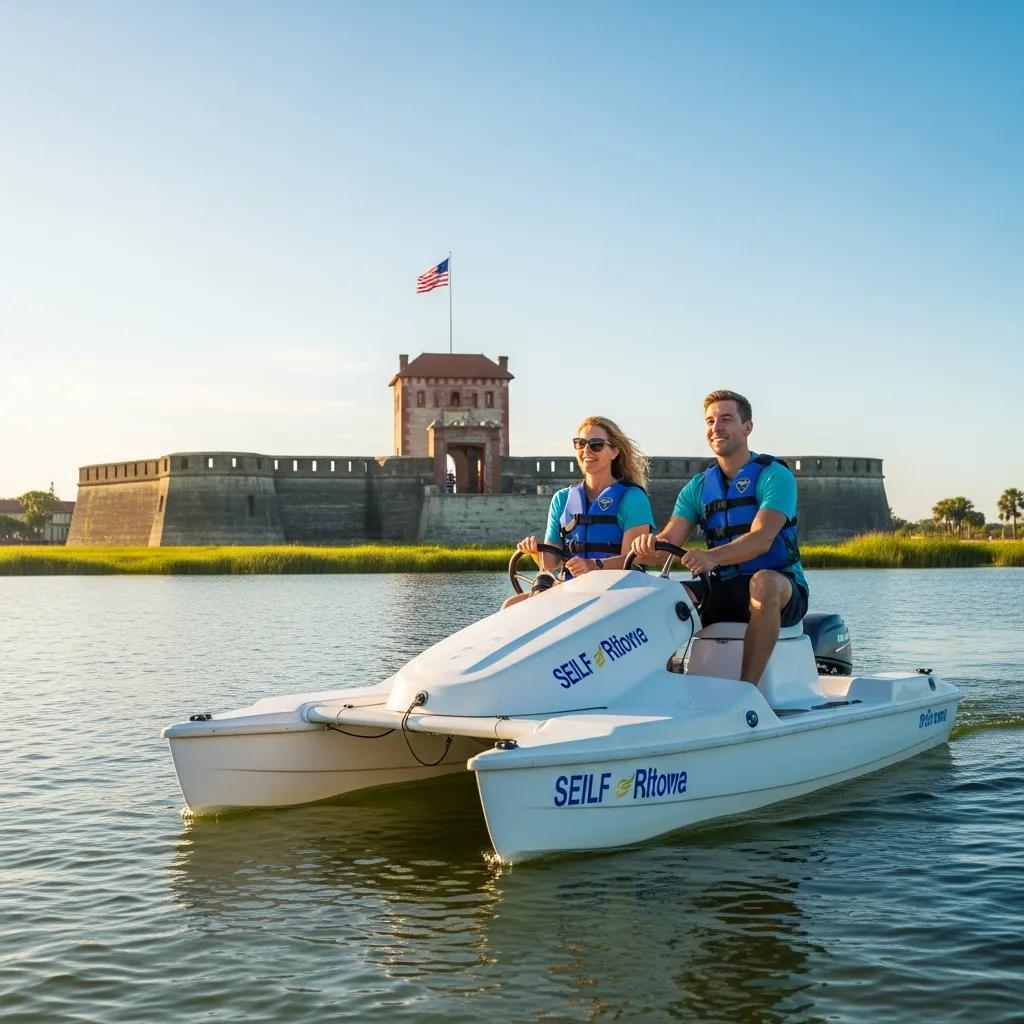
From the water you’ll often pass Castillo de San Marcos, the St. Augustine Lighthouse, and the Bridge of Lions, and you’ll enjoy excellent vantage points for dolphin sightings and, seasonally, manatees. Captains weave these sights into a short, engaging narrative—sharing history, the best angles for photos, and where wildlife is most likely to appear. Sightings are most common in calm inlet areas and around feeding grounds at dawn or dusk; when conditions allow, the captain will tweak the route to focus on likely encounter zones. Knowing what landmarks and species are typical helps you plan camera positions, seating, and which side of the boat to favor for viewing.
Familiarity with local waterways makes your time on the water safer and more enjoyable.
St. Augustine Waterways: Navigational, Historical, and Environmental Guide
Summary: St. Augustine—one of North America’s oldest cities—sits at Mile 778 of the Atlantic Intracoastal Waterway, a long coastal route running from Norfolk, Virginia, to Miami, Florida. This guide helps recreational boaters enjoy the area’s natural and cultural resources, highlighting maritime history, marinas, waterfront restaurants, boat ramps, common fish and wildlife, and natural features like salt marshes and estuaries. It also offers general safe‑navigation suggestions for waters affected by tidal currents near the St. Augustine Inlet. Note: use current nautical charts for navigation—this guide is for reference only.
Navigational, Historical and Environmental Perspective of St. Augustine Waterways: SGEB-59/SG066, 4/2005, FS Grant, 2005
How Much Do St Augustine Catamaran Rentals and Tours Cost?
Pricing for private catamaran rentals in St. Augustine depends on trip length, season, and the operator. Common options are short 1‑hour introductions, the popular 2‑hour scenic route, and longer 3‑hour explorations—each affects cost and time on the water. Fuel, captain time, seasonal demand, and any extra services (like extended wildlife searches or custom routes) drive price differences, so understanding typical ranges helps set expectations. Below is a compact comparison of common tour durations and price bands to help you pick what fits your schedule and budget.
This table compares standard self‑drive catamaran choices and similar small‑boat options by duration, typical price range, and passenger suitability.
| Option | Typical Duration | Typical Price Range |
|---|---|---|
| 1-hour self-drive catamaran | 1 hour | $80–$120 per vessel |
| 2-hour self-drive catamaran | 2 hours | $140–$220 per vessel |
| 3-hour self-drive catamaran | 3 hours | $200–$320 per vessel |
Two‑seater self‑drive catamarans are ideal for couples or solo pilots looking for a hands‑on outing; longer trips give you more relaxed sightseeing time and a better chance of wildlife encounters. Next we cover typical passenger limits and the trade‑offs to consider when picking a duration.
What Are the Typical Rental Durations and Passenger Limits?
Most two‑seater self‑drive catamarans are built for one driver and one passenger, so they’re perfect for couples, solo travelers, or a parent with a child. Pontoons and larger charters offer more seats but are less nimble. A two‑hour route is a common sweet spot—enough time to see landmarks without feeling rushed—while a one‑hour slot suits tight schedules and a three‑hour trip gives more time for wildlife searching and relaxed photography. If you’re traveling with a family or a small group, consider pairing a short catamaran session with a pontoon rental or a longer guided charter to get both intimacy and capacity. Your priorities—hands‑on driving, wildlife focus, or group seating—should guide the choice.
How Can You Book and What Is the Cancellation Policy?
Booking usually means picking a date and duration, providing driver details and an emergency contact, and paying a deposit with the balance due at check‑in or beforehand. Operators recommend booking ahead for peak times and weekends. Cancellation rules differ by company, but common practices include partial refunds for cancellations made outside a specified window, weather‑based rescheduling options, and full refunds if a tour is canceled for safety reasons—so always confirm the policy before you book. For a local example, you can reserve directly with Bluewater Adventure, a family‑run operator offering guided self‑drive two‑seater catamaran tours with captain support; their reservation flow follows standard online booking steps and includes weather‑based rescheduling. Book early in high season, give accurate driver info, and read the cancellation terms to avoid surprises before your trip.
What Safety and Preparation Guidelines Should You Know Before Your Catamaran Tour?

Safety for a self‑drive catamaran centers on clear driver rules, the right clothing, and a basic sense of sea and weather conditions. Operators supply required life jackets, a safety briefing, and captain oversight to reduce risk. Prepare by checking age and ID requirements, packing sun protection and water, and reviewing weather cancellation policies so you don’t head out on an unsafe day. The table below summarizes common driver and safety expectations so you can confirm eligibility and paperwork before arrival, preventing last‑minute delays and helping everyone board ready.
This table summarizes typical driver requirements and safety attributes for self‑drive catamaran rentals.
| Requirement | Typical Operator Rule | Practical Note |
|---|---|---|
| Minimum driver age | 18 years | Bring a government photo ID to verify age |
| Driver credential | Valid driver’s license usually required | Some operators accept other photo ID; check policy |
| Boating safety card | Varies by birth year/region | Ask operator if training certificate is needed |
| Intoxication policy | Zero tolerance for impaired operation | Operators may refuse service for safety |
In short: many operators require drivers to be 18+ and to show a valid ID—confirm these details before you arrive to avoid on‑site issues.
What Are the Driver Requirements and Age Restrictions?
Most operators ask that drivers be at least 18 and present a government‑issued photo ID (for example, a driver’s license) to confirm identity and responsibility while operating the vessel. Some jurisdictions or operators require boater safety cards for people born after certain years, so check local rules and the operator’s policy when you book. Operators can refuse service to anyone they judge unable to operate safely—this includes intoxication or failure to follow the safety briefing—so designate a sober backup driver if needed. Knowing these rules ahead of time helps groups pick the right driver and bring the necessary documents.
What Should You Bring and Wear for a Safe and Comfortable Tour?
Pack for sun, comfort, and secure footing: reef‑safe sunscreen, a wide‑brim hat, polarized sunglasses, a light waterproof jacket, and closed‑toe water shoes will keep you comfortable on deck. Bring a small dry bag for phones and cameras, any medications you need, and motion‑sickness remedies if you’re prone to seasickness. Families should pack child‑approved flotation devices if the operator allows them. Avoid loose jewelry or items likely to fall overboard, and bring a printed or digital ID for driver verification. Having this kit ready before your briefing lets you focus on the scenery and wildlife once you’re out on the water.
Why Choose Bluewater Adventure for Your St Augustine Catamaran Rental?
Bluewater Adventure is a family‑owned company that specializes in guided self‑drive catamaran tours, pairing local captain expertise with the chance to pilot your own two‑seater. A family‑run operator often delivers more personal service, careful equipment upkeep, and deep local knowledge that brings landmarks like Castillo de San Marcos and the St. Augustine Lighthouse to life. Bluewater Adventure’s model pairs two‑seater self‑drive boats with a nearby guide who sets the route and supports safety—an experience that feels more intimate than large charters or marketplace listings that may lack consistent local narration. If you want a small‑boat, interactive outing with real local stewardship, this approach is built for that.
Here’s how family ownership and local focus translate into better service and a stronger guest experience.
- Personalized service and hands‑on operator involvement let routes flex to guest interests.
- Local captains share historical and ecological context that enriches both landmark and wildlife viewing.
- A focus on maintenance and safety reduces mechanical surprises and builds guest confidence.
Those advantages explain why many guests choose family‑run providers for intimate, hands‑on outings and set expectations for typical guest feedback.
How Does Bluewater Adventure’s Family-Owned Approach Enhance Your Experience?
Being family‑owned often means tighter local relationships, daily owner oversight, and a long‑term focus on reputation—qualities that show up as consistent equipment care and attentive customer service. Practically, that means well‑maintained two‑seater catamarans, captains who know where wildlife concentrates and when landmarks look best, and staff who can adapt routes for weather or guest preferences. This hands‑on attention builds trust: you pilot the craft while a nearby expert prioritizes safety and storytelling. For visitors who prefer regional knowledge and personal service over big, mass‑market tours, family ownership usually delivers a more reassuring, memorable outing.
What Do Customers Say About Their Self-Drive Catamaran Tours?
Guest feedback for guided self‑drive catamaran trips commonly praises how easy the boats are to drive, the quality of wildlife sightings, and the value of the captain’s local narration. Reviews often highlight guides who balance safety and storytelling, and many guests appreciate the intimacy of the two‑seater compared with larger charters—this is the key selling point for self‑drive tours. If you want current social proof, check up‑to‑date public reviews to see recent guest comments and ratings before booking; aggregated feedback helps set realistic expectations for the hands‑on nature of the outing and likely landmark and wildlife viewing.
Sustainable tourism practices matter—especially when observing wildlife.
Sustainable Dolphin Watching Tourism Development Strategy
Summary: This study analyzed prioritization strategies for developing sustainable dolphin‑watching tourism in Lovina Beach, involving government officials, boat operators, villagers, academics, and tourists. Researchers used focus groups, observation, interviews, and document analysis with tools like SWOT and AHP to rank priorities. The results identified five main criteria used to guide sustainable dolphin‑watching strategies in the area.
THE PRIORITIZATION OF SUSTAINABLE DOLPHIN WATCHING TOURISM DEVELOPMENT STRATEGY IN LOVINA BEACH BALI, A. A. A. R. M. Purwahita, 1984
What Are the Best Things to Do on the Water in St Augustine Besides Catamaran Rentals?
St. Augustine’s waterways offer more than self‑drive catamarans: consider pontoon rentals for larger groups, seasonal Nights of Lights boat tours for holiday illuminations, and focused guided dolphin and wildlife excursions with naturalist commentary. Each option has a clear advantage—pontoons for space and comfort, Nights of Lights for unique evening photos, and wildlife tours for ecology‑focused searches and a higher chance of close encounters. The table below compares these alternatives by who they suit best and what each does well, so you can pick the right companion activity or alternative.
This comparison table outlines common water activities in St. Augustine and the scenarios where each shines.
| Activity | Best For | Unique Benefit |
|---|---|---|
| Pontoon rental | Larger groups/families | Comfortable seating and space for gear |
| Nights of Lights boat tour | Holiday/photography | Waterfront vantage for seasonal illuminations |
| Guided dolphin/wildlife tour | Nature enthusiasts | Expert‑led searches and ecological commentary |
How Do Pontoon Rentals and Nights of Lights Tours Compare?
Pontoon rentals work well for bigger groups who want shade, seating, and a stable platform for socializing. Self‑drive catamarans favor maneuverability and pilot engagement for one or two people. Nights of Lights is a seasonal evening attraction best seen from the water, where boats can get close to illuminated shorelines and offer uninterrupted photo angles—these run only during the holiday window and usually on a set schedule. When choosing, consider group size, pace, and season: pontoons for daytime family outings, catamarans for hands‑on exploration, and Nights of Lights for evening photos. Pairing a short daytime catamaran trip with an evening lights tour makes for a full, varied day on the coast.
What Unique Experiences Do Guided Dolphin and Wildlife Tours Offer?
Guided dolphin and wildlife tours emphasize ecological interpretation. Naturalist guides pick routes and times to raise the odds of sightings, explain animal behavior and habitat, and stress conservation. These tours often linger in prime feeding grounds or estuary mouths and adjust speed and positioning to minimize disturbance while maximizing viewing opportunities for photographers and nature lovers. If your priority is wildlife encounters and learning, a specialist wildlife tour typically offers a higher chance of close views than a general sightseeing route. Combining a self‑drive catamaran for the hands‑on thrill with a separate wildlife‑focused excursion gives you both piloting satisfaction and better odds of seeing species up close.
How Can You Maximize Your St Augustine Catamaran Tour Experience?
To get the most from a guided self‑drive catamaran tour: pick the best time of day for wildlife and light, tell the captain your interests before departure, and rotate drivers so everyone gets a turn. These simple steps align route choices with natural rhythms—like feeding times and low‑glare windows—so you’ll capture better photos and see more wildlife. Below are practical tips to use when planning and during your outing to ensure comfort, safety, and memorable views.
Follow these actionable tips to make the most of your time on the water and ensure a smooth, enjoyable trip.
- Book a morning or late‑afternoon slot for higher chances of dolphin activity and gentler photographic light.
- Bring polarized sunglasses and a waterproof case for your camera or phone to capture clearer on‑water shots.
- Rotate drivers in two‑person groups so everyone can steer while keeping safety and rest balanced.
These steps help you balance piloting with wildlife viewing. The next section gives landmark‑specific tips to prioritize during your route.
What Are the Top Landmarks to Explore from the Water?
Don’t miss Castillo de San Marcos for commanding fort views, the St. Augustine Lighthouse for dramatic silhouettes, and the Bridge of Lions for classic waterfront architecture—each looks especially striking from the low‑angle, water‑level perspective of a catamaran. Captains usually time passages to give you the best side for pictures and will suggest which side of the boat offers the best composition for each landmark—handy for amateur photographers. Including these sites in your route gives the tour a narrative thread that links local history with the coastal landscape and makes for better photos—especially if you aim to pass them during calm‑water windows when conditions are friendlier for novice drivers.
How Can Families and Small Groups Enjoy the Self-Drive Catamaran Adventure?
Families and small groups get the most enjoyment by naming a primary driver and a co‑pilot, rotating driving duties, and setting simple safety rules for kids (for example, seated time and supervised movement on deck). Pack age‑appropriate PFDs if allowed, bring snacks and drinks for younger passengers between viewing windows, and consider pairing a short catamaran ride with a shore lunch or beach break for a balanced day. A typical family plan might be a two‑hour piloting loop in the morning followed by a midday picnic ashore—giving kids a rest and keeping energy high for the next activity. These practical strategies keep children safe and engaged while adults enjoy steering and sightseeing.
This guide has covered what to expect from private catamaran rentals in St. Augustine: inclusions, how the self‑drive experience runs, pricing and booking basics, safety and packing, complementary water activities, and practical tips to improve your outing. Use this information to choose the right trip length, prepare for safety and comfort, and decide whether the close, hands‑on experience of a two‑seater self‑drive catamaran matches your travel plans. For bookings and local scheduling, consider contacting Bluewater Adventure—a family‑operated provider offering guided self‑drive catamaran tours in the St. Augustine area—who can confirm availability, driver requirements, and reservation details through their listed contact channels.
Frequently Asked Questions
What should I know about weather conditions before my catamaran tour?
Weather affects your trip. Check the forecast for wind, rain, and tides before you head out—operators may cancel or reschedule tours for safety. Bright sun can cause water glare, so booking early morning or late afternoon improves visibility and wildlife chances. Dress for conditions and bring sun protection to stay comfortable.
Are there any age restrictions for passengers on the catamaran?
Drivers are typically required to be 18 or older, but passenger age limits are usually flexible. Operators commonly require children to wear life jackets at all times. Check the rental company’s policies for child passenger rules and any extra safety steps. Always supervise younger children and review simple safety rules before boarding.
What happens if I encounter wildlife during my tour?
Wildlife encounters—like dolphins or manatees—are highlights. Your guide will show you how to observe respectfully: keep a safe distance, avoid interference with natural behavior, and follow the captain’s instructions. The captain will adjust the route to improve viewing while complying with local wildlife protection rules. Respectful watching keeps animals and guests safe.
Can I bring food and drinks on the catamaran?
Yes—most rentals allow food and drinks and often supply a cooler with ice. Snacks and hydration are especially handy on longer trips. Be mindful of the operator’s alcohol rules and store items securely to avoid spills. A small picnic can make the outing more enjoyable.
What should I do if I have a medical condition or disability?
Tell the rental operator about any medical conditions or disabilities when you book. Many operators do their best to accommodate guests, but advance notice is essential for planning. Discuss needs like mobility help or medical equipment so staff can plan and ensure a safe, comfortable experience.
Is there a limit on the number of passengers for the catamaran?
Yes—self‑drive catamarans typically have a two‑person limit per vessel. That design keeps the ride safe and enjoyable. For larger groups, consider booking multiple catamarans or choosing a pontoon rental to fit everyone comfortably. Always confirm capacity rules with the operator.
What should I do if I need to cancel my reservation?
If you must cancel, review the operator’s cancellation policy—you’ll usually find partial refunds for cancellations made outside a set window, and weather‑related rescheduling is commonly offered. Contact the rental company as soon as possible to discuss options. Knowing the cancellation terms when you book prevents surprises later.
Conclusion
Private catamaran rentals in St. Augustine combine the freedom of piloting your own craft with the reassurance of local guidance. The result is a personal sightseeing trip that pairs historic storytelling with strong chances of wildlife encounters. If you’re ready for a hands‑on, local‑led adventure, consider booking with a trusted family‑run company like Bluewater Adventure. Start planning your guided self‑drive catamaran tour and make some great memories on the water.