Explore Family-Friendly Boat Tours in St. Augustine
Family-Friendly Boat Tours in St. Augustine — Find the Perfect Trip for Your Crew

St. Augustine blends wild coastal life, living history, and calm waterways — the perfect recipe for a family outing, whether you’re packing toddlers, school-age explorers, or teens ready for hands-on fun. This guide walks through the top family-friendly boat tour options in St. Augustine — from drive-your-own catamarans and roomy pontoon rentals to seasonal Nights of Lights cruises and wildlife-focused trips — and helps parents pick the right fit. You’ll learn what to expect on each tour type, how to spot dolphins and manatees with kids in tow, which historic sights show best from the water, plus practical packing, safety, and booking tips that cut stress and boost fun. The guide also includes quick comparison charts, family-specific packing checklists, and clear booking advice so you can choose a trip that matches your kids’ ages, energy, and curiosity. Everything here is focused on practical, family-centered tips you can use to plan a memorable day on St. Augustine’s waterways.
What Are the Best Family-Friendly Boat Tours Available in St. Augustine?
Family-friendly boat options here fall into a few easy-to-compare groups: interactive catamaran adventures that invite participation, flexible pontoon rentals for self-guided days, wildlife- and dolphin-watching trips led by naturalists, and seasonal evening cruises that showcase local festivals from the water. Each type offers distinct benefits — hands-on learning, space and comfort, focused wildlife viewing, or festive evening scenes. The best choice depends on your kids’ ages, how much supervision you want, and whether you prefer guided narration or to set your own pace. Use the quick comparison below to match a trip type to your family’s needs before reading the details that follow.
Different tour styles prioritize different family goals and viewing experiences.
| Tour Type | Typical Duration / Price | Best For | Key Sights |
|---|---|---|---|
| Catamaran (interactive) | 2 hours / from $149 | Families with older kids & teens who enjoy hands-on activity | Dolphin sightings, coastal views, Castillo de San Marcos |
| Pontoon Rental | 2/4/6 hours / from $275 | Multi-gen families, toddlers, groups wanting flexibility | Bay cruising, shallow coves, picnic stops |
| Wildlife/Dolphin Watching | 2 hours / Varies by operator | Nature-focused families and budding naturalists | Matanzas Bay, nearshore channels |
| Nights of Lights Boat Tour | 1.5 hours / seasonal | Families seeking festive evening views (Nov–Jan) | Waterfront holiday lights, historic district from water |
This snapshot makes it easier to weigh duration, cost, and family fit so you can narrow choices quickly before diving into the full descriptions below.
How Does the St. Augustine Catamaran Tour Offer a Unique Family Experience?
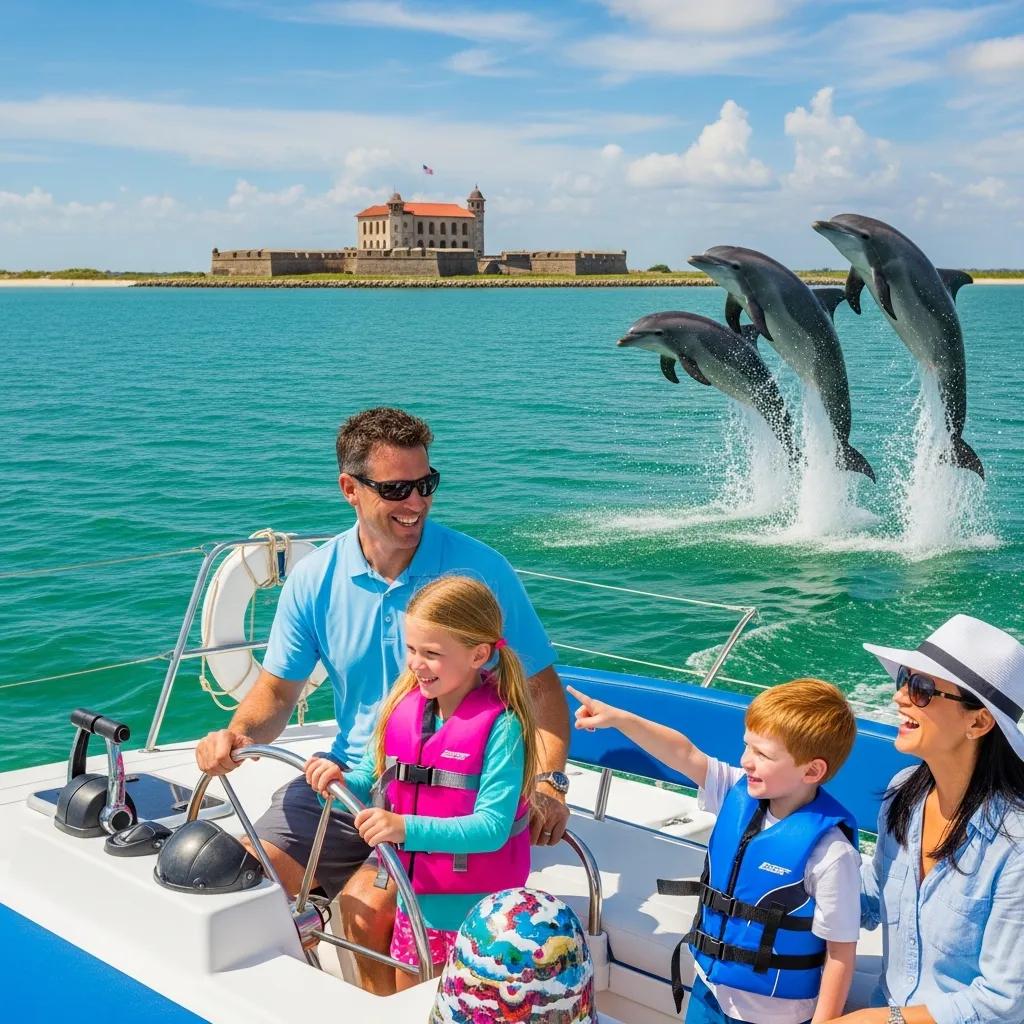
The family-focused catamaran mixes supervised, drive-your-own elements with clear safety instruction, creating a hands-on outing that keeps older kids engaged. With guided briefings and crew oversight, families learn basic seamanship while kids get to steer, spot, and take photos — all under adult supervision. On a typical two-hour trip, groups rotate roles like lookout, navigator, and photographer while guides point out dolphins, coastal birds, and nearby historic sites to keep curiosity high. Safety measures include properly fitted lifejackets and a simple briefing on boundaries and supervision, so caregivers can relax while kids explore under watchful guidance.
That balance of freedom and supervision turns a passive cruise into a participatory lesson in navigation and nature for the whole family.
What Makes Pontoon Boat Rentals Ideal for Families and Groups?
Pontoon rentals are roomy, stable, and shaded — ideal for toddlers, grandparents, or families who want a relaxed, self-paced day on the water. Wide decks and ample seating let caregivers spread snacks, gear, and activities while cruising shallow coves, stopping for swims, or picnicking at quiet anchor spots. Two-hour rentals work well for short attention spans; four- and six-hour options let you explore more and make multiple stops for wildlife or photos. Bring reef-safe sunscreen, swim gear, and a few toys to keep little ones busy; most companies give a short orientation to safe routes and docking before you cast off.
Pontoons shine when you want control over pace and itinerary instead of a fixed-route guided tour.
Which Wildlife Can Families Expect to See on St. Augustine Boat Tours?

On St. Augustine tours you’ll commonly see Atlantic bottlenose dolphins, seasonal West Indian manatees, and a variety of shore and wading birds — great quick lessons for curious kids.
Wildlife shows up here because shallow feeding areas and tidal flows concentrate baitfish, which draws dolphins and seabirds; experienced guides use those cues to predict sightings. Respectful viewing — quiet voices, keeping distance, and following crew directions — increases sighting chances and teaches kids good stewardship. The table below lists common species, the best times to look, and top viewing spots from a tour boat.
| Species | When Seen | Likelihood | Best Viewing Spots |
|---|---|---|---|
| Atlantic bottlenose dolphins | Year-round, best mornings | High | Nearshore channels, Matanzas Bay |
| West Indian manatees | Seasonal, cooler months (Nov–March) | Medium | Shallow estuaries, tidal creeks |
| Wading & shore birds | Year-round | High | Marsh edges, estuary channels |
This sets realistic expectations and helps families choose earlier departures or calmer routes that often improve viewing success.
How Can Families Spot Dolphins and Manatees on These Tours?
Dolphins surface to breathe and often travel where baitfish gather, so watch for splashes, dorsal fins, or long ripples along the water. Guides teach kids short, focused scanning techniques — sweeping the horizon and waterline in quick bursts — and point out likely feeding zones near sandbars and tidal inlets. Manatees, when present in cooler months, prefer shallow, vegetated waters and move slowly; spotting them means slowing down and watching for rounded backs breaking the surface. Responsible viewing: stay a respectful distance, follow crew directions, and avoid sudden noise or engine moves that could stress animals.
Quiet attention and following guide cues turn wildlife watching into a rewarding educational activity for the whole family.
What Other Wildlife and Bird Watching Opportunities Are Available?
Beyond dolphins and manatees, you may see snowy plovers, herons, ospreys, pelicans, rays, crabs, and the occasional sea turtle — perfect for quick nature lessons. Bring a small pair of binoculars or a simple birding app and turn the trip into a scavenger hunt where kids check off species as they appear.
Bird-friendly routes often slow near marsh edges, oyster bars, and lighthouse habitats where feeding and nesting concentrate — great spots for photographers and budding naturalists. Choosing wildlife-focused tours or a flexible pontoon can increase the variety of sightings and create a quieter space for observing.
Linking animal behavior to local habitats helps children understand why species appear where they do and encourages care for coastal ecosystems.
Marine Wildlife Tours: Education, Conservation, and Visitor Benefits
Marine wildlife tourism can deliver meaningful education and conservation benefits through close encounters and guided learning about marine species and ocean habitats. This review uses Orams’ indicators to assess whether such experiences increase visitor knowledge, promote pro-environmental attitudes, and lead to behavior changes that support marine conservation. Drawing on case studies of guided encounters with whales, dolphins, and marine turtles (1996–2007), the analysis found that mediated wildlife experiences often boost on-site behavior changes and sometimes encourage longer-term conservation intentions among visitors.
Conservation and education benefits of interpretation on marine wildlife tours, H Zeppel, 2009
How Do Seasonal Tours Like the Nights of Lights Enhance Family Boat Adventures?

Nights of Lights turns a typical boat ride into a sensory family event by putting you on the water where historic streets and waterfront facades glow and reflect — giving you clear views without the crowds or tired feet. From a boat, families get uninterrupted sightlines to clustered decorations while small children stay warm and comfortable. Evening sailings of about 1.5 hours make for a compact, memorable outing with plenty of photo ops, cozy seating, and crew tips for staying comfortable during cool months. Book early for November–January dates, and follow operator advice on dress and boarding times to make the night easier with kids.
Viewing festival lights from the water is often quieter and more accessible than navigating packed sidewalks — a welcome option for many parents.
What Makes the Nights of Lights Boat Tour Special for Families?
On the water, lights reflect on calm bay surfaces and the slower pace gives little ones time to take it all in without hurried walking. The 1.5-hour format balances excitement with short attention spans, leaving room for warm layers, hot drinks, and short stories about local landmarks. Crew members help with safe boarding and explain seating and movement while underway, which eases caregiver stress at night. Dock boarding is often simpler than crowded sidewalks, and the whole scene can become a treasured holiday memory for kids who love lights and gentle motion.
Parents who value comfort and clear views often prefer nights-on-the-water over land-based tours during busy holiday weeks.
When Is the Best Time to Book and Attend Nights of Lights Tours?
Nights of Lights runs mid-November through January, with weekend evenings and holiday weeks in highest demand — so plan to book several weeks ahead for peak dates and earlier if you’re visiting during school breaks. Weeknights and earlier sailings usually have smaller crowds and easier boarding windows, which helps families keep to bedtime routines. Dress in layers, bring small blankets and thermoses for chilly nights, and arrive early so kids can settle and crews can run safety basics before you depart. Reserving early also gives you better boarding times for family groups who need a little extra setup time.
Choosing less crowded nights and earlier sailings makes the outing smoother for families juggling meals and bedtimes.
What Historic Landmarks Can Families Explore from the Water in St. Augustine?
St. Augustine’s waterways showcase several iconic landmarks that make great short stories for kids, including Castillo de San Marcos and the St. Augustine Lighthouse — both easily seen from bay tours. From the boat, guides can position you to highlight architectural details, explain defensive and maritime history in kid-friendly terms, and stop for photos that show turret lines, fort walls, and the lighthouse silhouette. Tours often weave these stops into simple narratives about early settlement and maritime life, turning landmarks into characters rather than lists of facts. Those short anecdotes help families link what they see from the water to a later land visit to museums or the lighthouse climb.
Framing landmarks as stories rather than facts helps young listeners remember and want to learn more.
How Do Tours Showcase Castillo de San Marcos and the St. Augustine Lighthouse?
Tours approach the Castillo and the lighthouse to highlight strategic placement and coastal defense: how coquina walls held up against cannon fire and how the lighthouse guided ships safely to harbor. Guides use the boat’s mobility to circle or pause at vantage points that reveal different angles, suggesting photo-ready moments and pointing out features like cannons, parapets, and the lantern room. Short, vivid storytelling — for example, calling the lighthouse a “ship’s eye” — turns history into memorable scenes for kids.
Those narrated moments make later on-shore visits more meaningful because children recognize places they already saw from the water.
What Other Historic Sites Are Visible on Family Boat Tours?
Beyond the Castillo and lighthouse, tours commonly point out the Bridge of Lions, historic waterfront mansions, and the Great Cross area, each offering quick stories about architecture, local figures, or maritime trade that appeal across ages. Guides often share one-line “why it matters” facts — who built a structure, which event took place nearby, or how shipping shaped the neighborhood — to spark curiosity without overwhelming young listeners. For mixed-age families, these bite-sized stops let caregivers expand on topics with older kids while keeping explanations simple for little ones.
Pairing on-boat storytelling with suggested on-land follow-ups creates a cohesive family learning plan for a full day in town.
St. Augustine Waterways: Navigational, Historical, and Environmental Guide for Boaters
St. Augustine, the oldest city in North America, sits at Mile 778 of the Atlantic Intracoastal Waterway, which runs 1,095 miles from Norfolk, Virginia, to Miami, Florida. This guide helps boaters enjoy and appreciate natural and cultural resources accessible from recreational vessels around St. Augustine. It describes maritime history, marinas, waterfront dining, boat ramps, representative fish and wildlife, and features like salt marshes, estuaries, and beaches. The guide also offers safe-navigation and anchoring tips for local waters, which are influenced by tidal currents near St. Augustine Inlet.
Navigational, Historical and Environmental Perspective of St. Augustine Waterways: SGEB-59/SG066, 4/2005, FS Grant, 2005
How Can Families Plan and Prepare for Their St. Augustine Boat Tour Adventure?
Great family boat days come down to planning: pick the right tour for your kids’ ages, pack essentials, know safety rules, and plan around weather and tides so fewer surprises pop up. A short checklist helps busy caregivers prioritize what to bring and which tour style suits their group. Confirm lifejacket policies and age recommendations at booking, and plan arrival logistics — parking, boarding windows, and check-in — so kids are calm and ready before departure.
| Family Type | Recommended Gear | Age Notes / Motion-Sickness Tips |
|---|---|---|
| Toddlers & preschoolers | Proper-fitting lifejackets, snacks, change of clothes | Choose short trips, bring familiar snacks; confirm lifejacket availability |
| School-age kids | Binoculars, sun hat, small activity kit | Hands-on tours work well; rotate lookout roles to maintain engagement |
| Multi-gen groups | Shade canopy items, extra seating cushions | Pontoon rentals suit diverse mobility needs; schedule rest stops |
Use this table to prioritize gear and match comfort to the right tour for your family.
What Are the Safety Guidelines and Age Recommendations for Family Tours?
Common safety steps include mandatory lifejackets for certain ages or weights, a crew safety briefing before departure, and set boundaries for where kids can move on board — always confirm details when you book. Operators usually advise extra supervision for toddlers and recommend caregivers hold young children during boarding and disembarking; older kids can take part more independently under supervision on interactive trips. If motion sickness is a concern, choose calmer morning sailings, pick shaded seating, and bring doctor-approved remedies. Let your operator know special needs in advance — mobility, medical notes, or behavioral tendencies — so crews can prepare and make your trip safer and more comfortable.
What Should Families Bring and Know Before Booking Their Tour or Rental?
Pack sun protection (reef-safe sunscreen, hats), snacks, water, waterproof phone cases, and a small first-aid kit; for chillier evenings bring compact blankets and warm layers. Check cancellation and weather policies when booking, arrive early for orientation, and have IDs and reservation confirmations handy. For rentals, review fuel and return rules, suggested routes, and any navigation orientation; for guided tours, ask about narration language, passenger limits, and restroom access. Keeping a short checklist in your phone or a printed sheet prevents last-minute forgetfulness and keeps the day running smoothly.
Bluewater Adventure offers family-focused options like the St. Augustine Catamaran Tour (from $149, 2 hours) and pontoon rentals (from $275 for 2/4/6 hours), and they run Nights of Lights Boat Tours seasonally (1.5 hours, mid-November–January). Contact and booking windows change with the season, so families visiting for the holidays should reserve early to secure preferred dates and boarding times.
Why Choose Bluewater Adventure for Your Family’s St. Augustine Boat Tour?
Bluewater Adventure centers family-friendly experiences and a mix of interactive and rental options to suit different dynamics — from drive-your-own catamarans to flexible pontoon rentals and seasonal Nights of Lights cruises. The drive-your-own catamaran is great for families who want hands-on learning with crew supervision, while pontoon rentals give space and comfort for toddlers, grandparents, and group picnics.
Picking a company that highlights family orientation and offers both guided interaction and self-guided flexibility makes planning easier for multi-age groups.
How Do Customer Reviews Highlight Family Satisfaction and Unique Experiences?
Reviews consistently mention helpful, family-friendly staff, exciting wildlife sightings, and positive experiences for both guided tours and rentals — all reassuring signs for caregivers. Reviewers often praise clear crew briefings, strong safety practices for children, and close wildlife encounters that made outings educational and fun. Checking recent reviews helps verify current operations and match your priorities — space, interactivity, or holiday scheduling — with the provider’s strengths.
Reading recent guest experiences can point you to the specific product — an interactive catamaran or a pontoon rental — that best fits your expectations.
What Are the Key Benefits of Driving Your Own Catamaran with Bluewater Adventure?
Driving your own catamaran turns a sightseeing trip into a cooperative family adventure that builds confidence and hands-on skills for older kids. The format encourages role rotation — one person steers while another photographs — creating shared memories you won’t get on a passive cruise. Safety stays front and center with crew briefings and oversight, and the instructional element teaches basic navigation and seamanship in a low-stress setting. For families after an active, photo-ready outing, the catamaran blends nature interpretation with experiential learning in a way many traditional cruises don’t.
This hands-on option is especially satisfying for families with older children and teens, while remaining accessible with proper supervision and safety measures.
- Choose the right tour for your family: match ages and mobility with tour type.
- Pack smart: sunscreen, snacks, water, and motion-sickness remedies as needed.
- Book early for seasonal tours: Nights of Lights fills quickly between November and January.
- Call Bluewater Adventure to confirm availability and safety accommodations for your family group.
- Plan arrival and parking to allow extra time for boarding and orientation.
- Bring comfort items like blankets or shaded seating for toddlers and elders.
Frequently Asked Questions
What should families consider when choosing a boat tour in St. Augustine?
Think about your kids’ ages and interests, the kind of experience you want (interactive, wildlife-focused, or relaxed), and how much supervision you prefer. Consider tour length — younger children often do better on shorter trips — and check for amenities like shade, seating, and lifejacket availability to keep everyone comfortable and safe.
Are there any age restrictions for participating in boat tours?
Age rules vary by operator and tour type. Most tours require lifejackets for children, and some activities — like driving a catamaran — have minimum age limits. Ask the provider about age policies when booking. For very young children, extra supervision is usually recommended during boarding and disembarking. Confirm details ahead of time to ensure a safe trip for your group.
What are the best times of year to go on boat tours in St. Augustine?
Spring and fall are ideal for mild weather and pleasant conditions. Nights of Lights (mid-November to January) offers a special holiday experience by water. Summer can be hot and busier, so early morning or late afternoon sailings are better for cooler temps and wildlife activity — good choices for families with young kids.
How can families ensure a smooth boarding process for their boat tour?
Arrive early for check-in and orientation, and have reservation confirmations and IDs ready. Let the operator know about any special needs ahead of time to speed boarding. Preparing kids for the routine — how boarding works and basic safety rules — helps reduce anxiety and keeps things running smoothly.
What should families do if the weather changes unexpectedly before their tour?
If weather shifts, contact your tour operator to learn about cancellation, rescheduling, or refund policies. Operators track conditions closely and may offer alternatives if it’s unsafe. Check forecasts before you leave and pack a light rain layer or extra warm clothing for evening trips to stay comfortable if plans change.
Are there any educational components included in the boat tours?
Yes — many tours include natural history and local-history insights, especially wildlife and heritage-focused trips. Guides often point out species, explain habitats, and share easy-to-follow stories about historic sites, turning the outing into a fun learning experience for kids and adults alike.
What are some tips for keeping children engaged during the boat tour?
Get kids involved: spotting wildlife, taking photos, or joining short guided discussions. Bring binoculars, a small activity kit, or a scavenger-hunt list to keep attention high. Rotate roles among family members — navigator, photographer, lookout — so everyone stays active and engaged throughout the trip.
Conclusion
St. Augustine’s family-friendly boat tours mix adventure, learning, and lasting memories for all ages. From hands-on catamaran trips to flexible pontoon rentals and seasonal Nights of Lights cruises, there’s a perfect option for every family. These outings offer wildlife sightings, bite-sized history, and chances to bond on the water. Start planning your maritime day — and discover the simple joy of exploring St. Augustine together.